Designing a job referral platform from 0 to 1
A new feature for an early-stage job-seeking platform helping international students find roles with visa support. Built end-to-end as Product Design Lead - research, design, and a fresh design system.
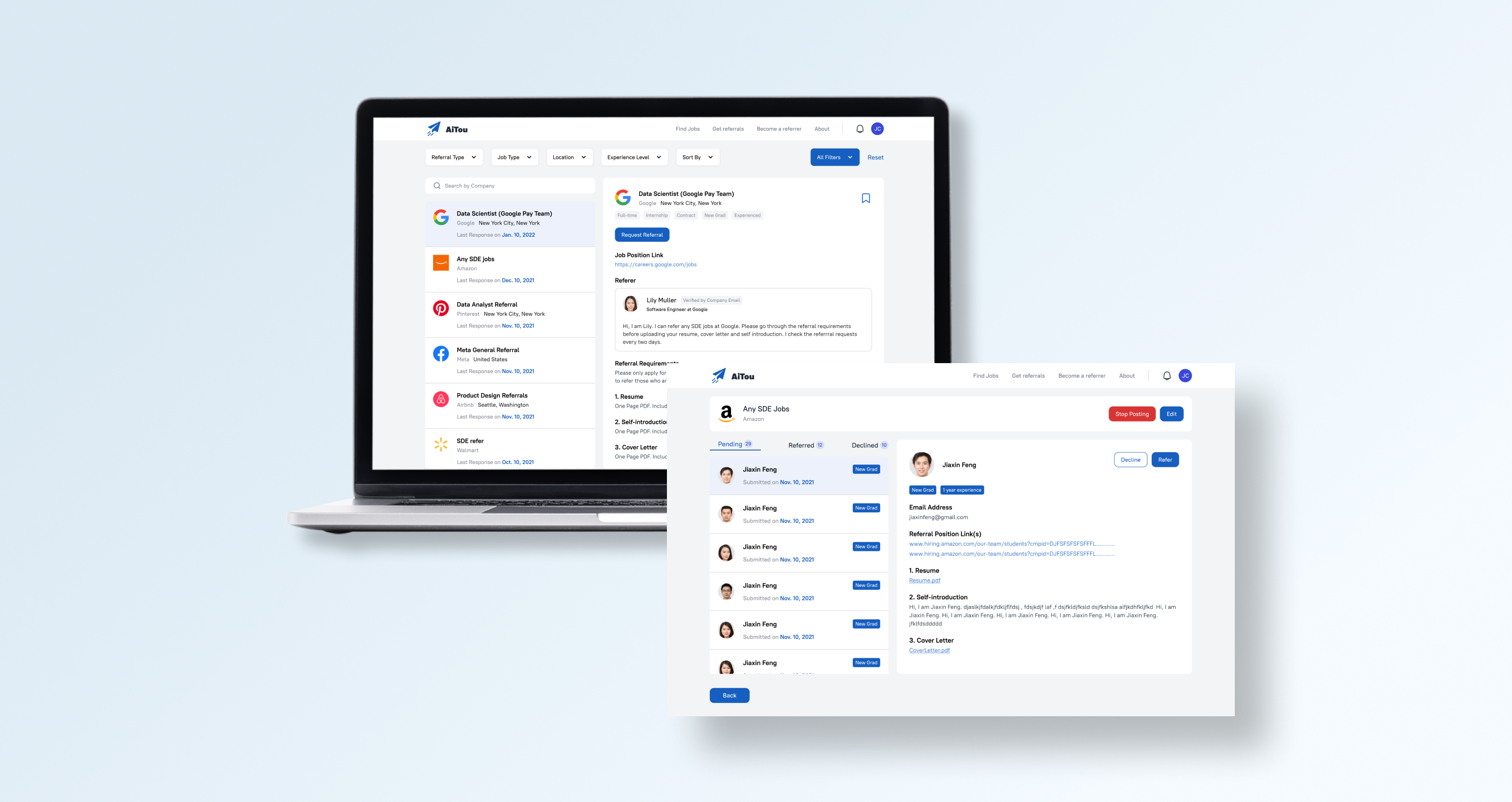
Why job referral?
We saw a huge unmet need for job referrals in the market. Beyond the user demand, referrals also opened up more monetization paths than pure job-search ever could - sponsored posts, premium referrer tools, paid match acceleration.
For AiTou, this wasn't a feature - it was a product pivot.
What shipped, and what it moved
Job referral is messy - for both sides
I empathized with users by interviewing 9 job-seekers and 8 referrers to surface pain points across the existing referral flow.

Usually look for referrals on LinkedIn by connecting with others or reach out to friends who already work there. The connecting and back-and-forth messages is time-consuming. It is also hard to track their requests or get responses timely.

Most referrers said that it is difficult to find suitable candidates, they don't know where to post the referral information, and it is hard to manage all the requests via emails.
Who I designed for
Two distinct sides of the marketplace, each with their own jobs-to-be-done. The platform had to serve both - or it served neither.
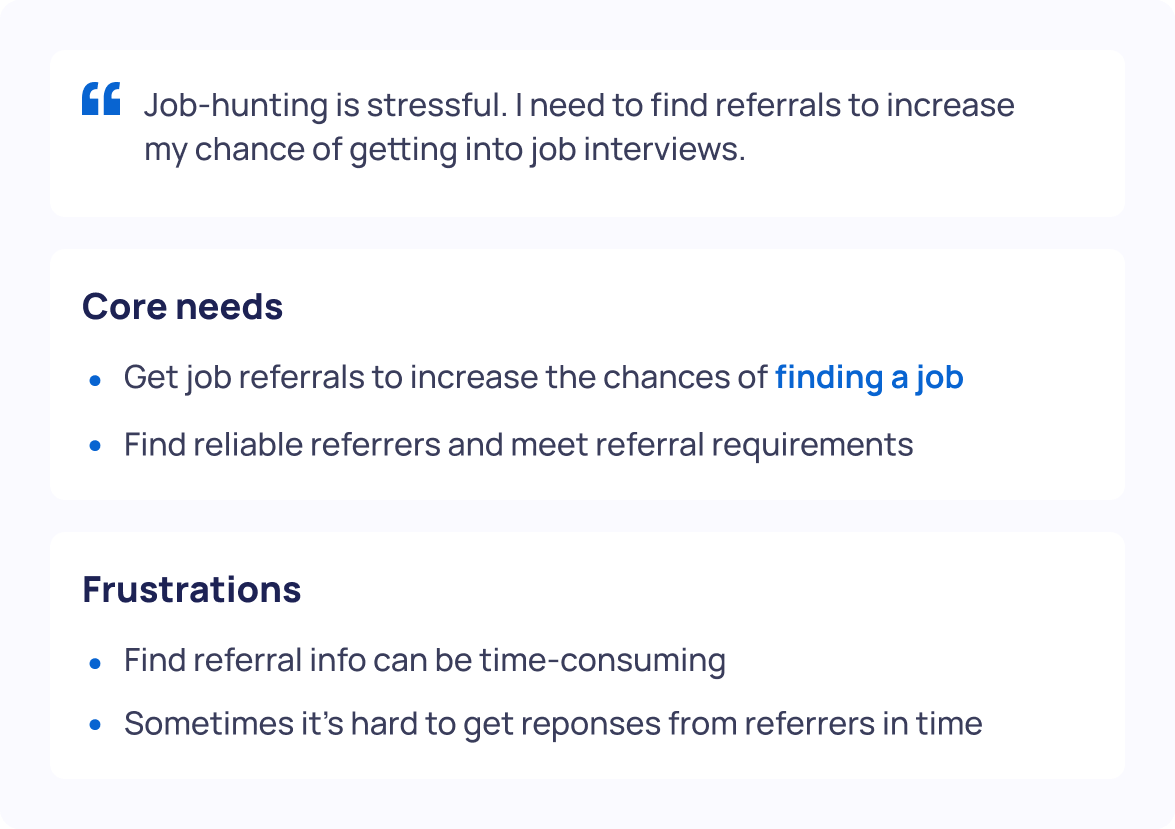
Job-seeker persona
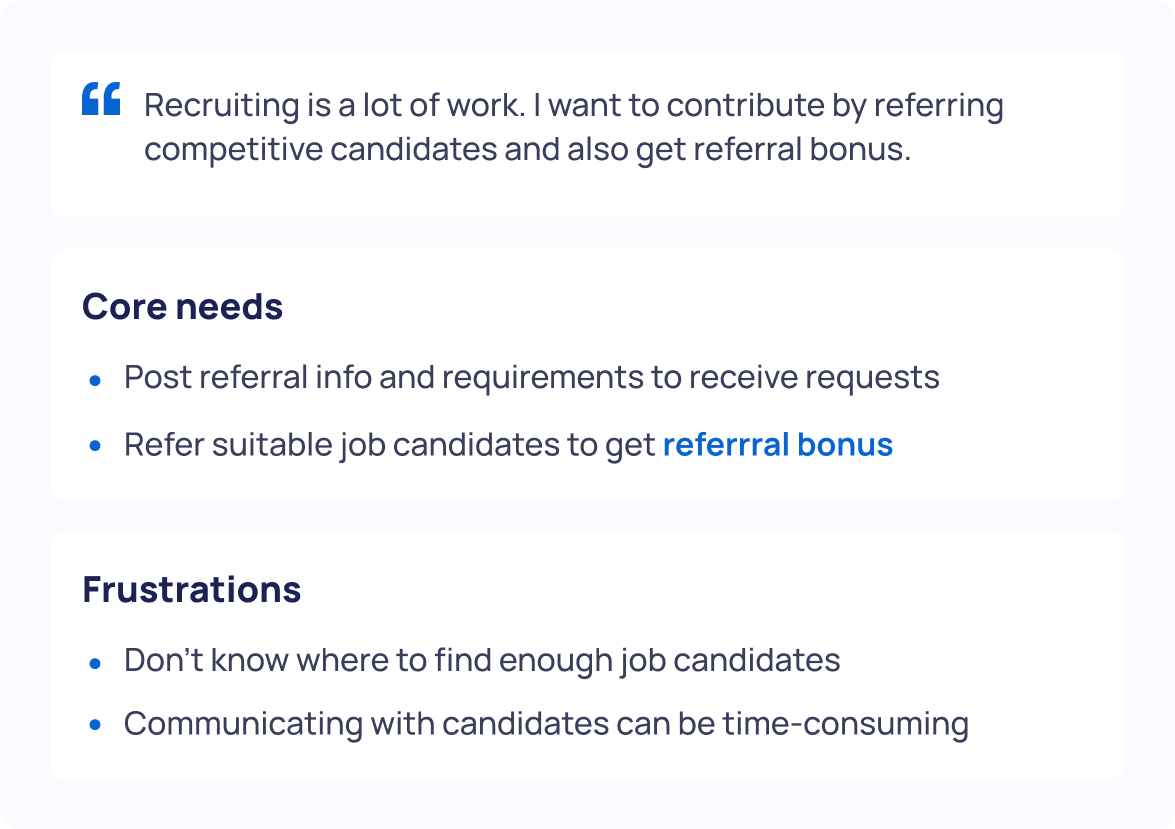
Referrer persona
Building bridges - redefining job referrals for both sides
We wanted to design a platform that lets job-seekers find matching referrals & request them (no more back-and-forth, no more wondering if anyone got the message), and lets referrers post referral info & manage requests easily (one place to find candidates, one place to respond).
.png)
Two sides, one platform - the design has to keep both moving
A platform that matches seekers with referrals - and helps referrers manage requests
Two coordinated flows: job-seekers browse referrals, request, and track status; referrers register, build a profile, post referrals, and manage incoming requests. Below is a walkthrough of each side, plus the design process I followed to get there.
For Job-seekers
Fill in a referral request, submit it directly to the referrer's inbox, then track or withdraw the request from the profile page.
.png)
.png)
.png)
Design Process
The flow I followed to ship this MVP - testing fed back into prototyping rather than waiting for one final review at the end.
.png)
Research → Ideation → Prototype → Testing → Implement (with a feedback loop back to Prototype)
How are other platforms doing job referral?
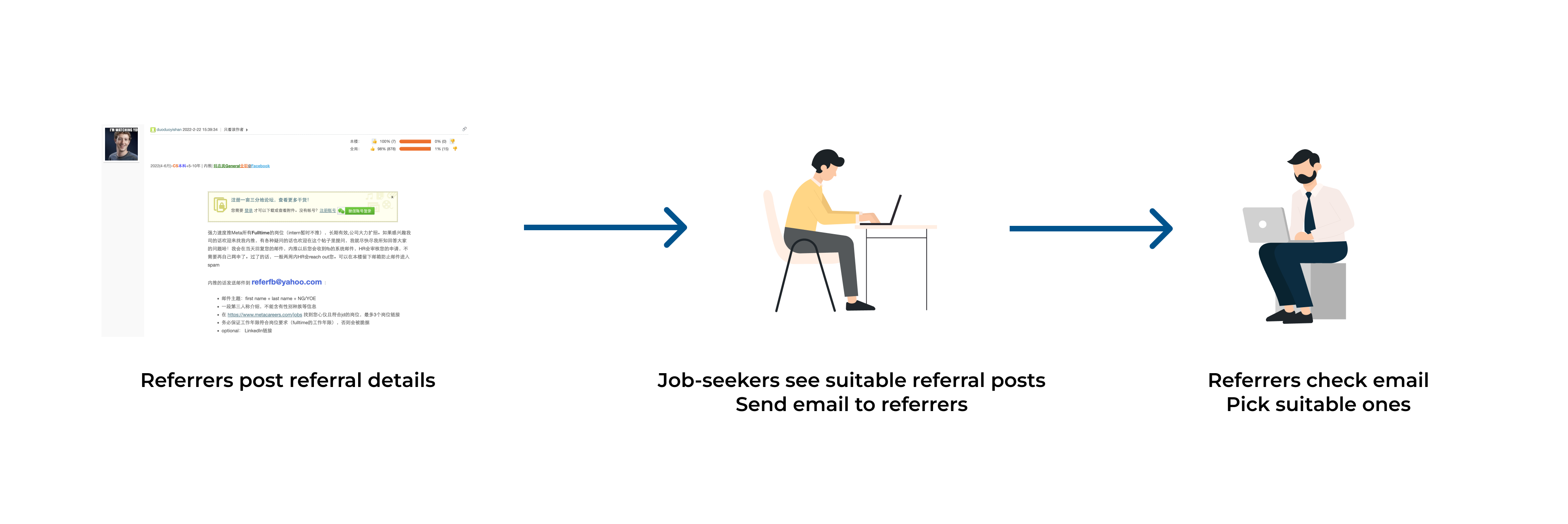
Before designing, I researched the landscape. Few platforms focus mainly on job referrals; the closest patterns came from Exponent and 1point3acres. I broke down each model's pros and cons to find where AiTou could differentiate.
Exponent · Anonymous request
Job-seekers submit referral requests blindly; they don't see referrer info or profiles. Referrers reach out if interested.
.png)
1point3acres · Public referral posts
Referrers post referral details on the platform to recruit candidates. Job-seekers browse posts and reach out to referrers directly.
Defining and building an MVP that matters
After identifying key gaps and opportunities in the market, we brainstormed ideas, prioritized features, and defined a focused MVP to address the most critical needs - protecting both sides' time and privacy without bloating scope.
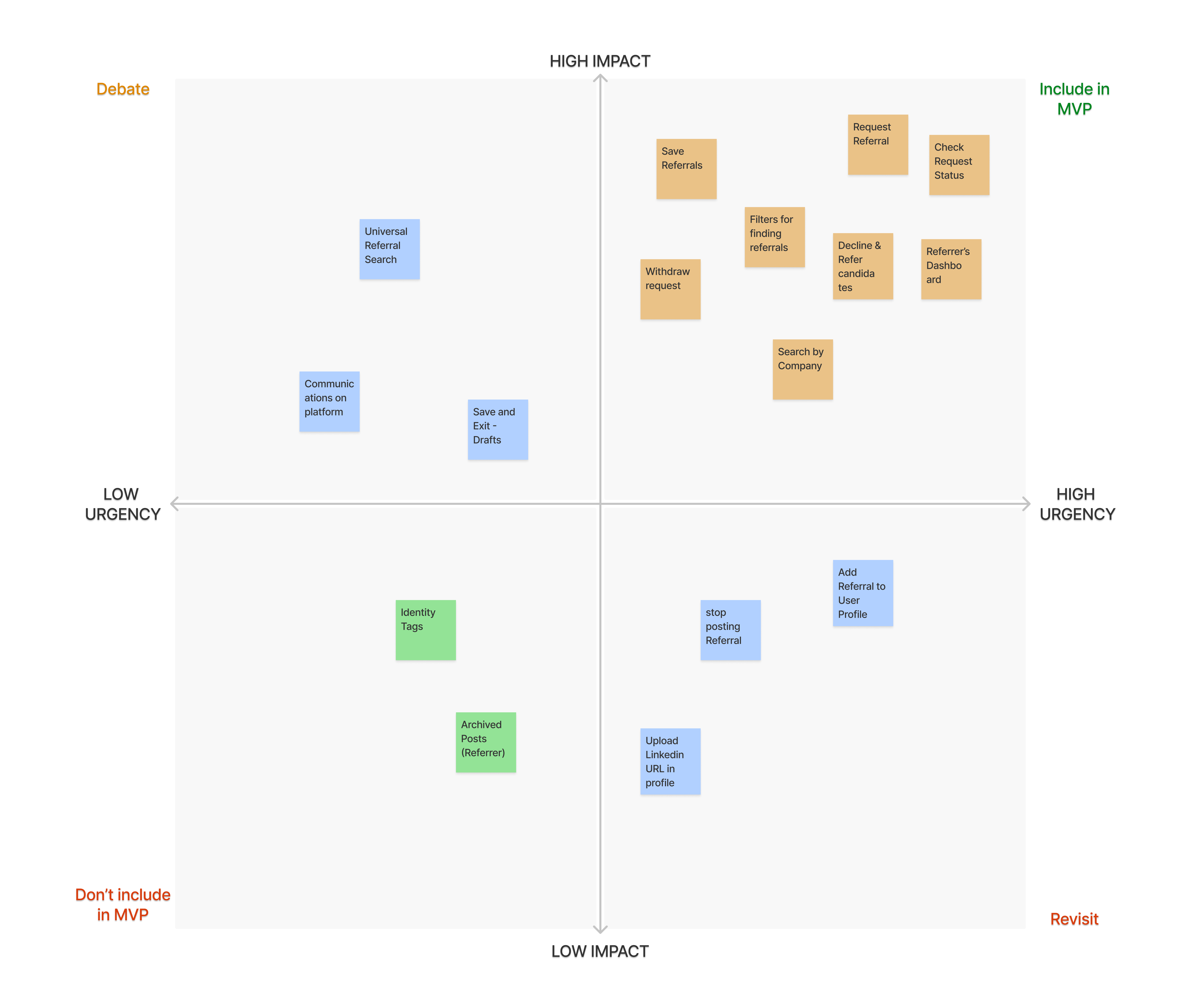
Feature prioritization - high-impact, low-effort first

Scope brainstorm - what's in v1, what waits for v2
Mapping the user journey
Two flows, two distinct mental models. The job-seeker flow optimizes for finding and requesting; the referrer flow optimizes for posting and managing. Each side's pain points became checkpoints in the diagram.
For job-seekers
.png)
For referrers
.png)
Two rounds with real seekers
Recruiting
- Considers referral an important component when finding a job
- Currently seeking, or has applied a job referral in the recent 2 years (familiar with the process)
- Uses apps or websites to find referrals
Method - Think Aloud
Participants shared their screen (if remote) and thought aloud through the whole process. I recorded the screen and verbal answers, then walked them through three tasks:
- Take a minute to explore the site - what is AiTou about?
- You're seeking a Software Development Engineer referral at Google. Search and request the referral.
- You've requested a referral - now try to track its status.

Think Aloud - planning prompts and follow-up questions per page
1st round - 5 in-person participants


2nd round - 17 participants total
Each team member found 2-3 target users. We sent out a survey to gather quantitative feedback to balance the qualitative observations from round 1.
What changed after testing
Users couldn't tell which referrals were active vs. expired and missed the filter affordance. I rebuilt the list with status pills, clearer hierarchy, and a persistent filter rail.
.png)
What information should appear in the card before a click? Testing showed seekers wanted role, location, deadline, and referrer's seniority - not the referrer's name. Cards became scannable instead of dense.
.png)
The detail page balanced two competing needs: giving seekers enough context to decide, and protecting referrer privacy. I added an explicit "what referrers will see" section so seekers self-edit before sending.
.png)
Five remote sessions with active referrers
AiTou's existing referrer list became my recruitment pool. I ran 5 remote sessions where referrers screen-shared and thought aloud while posting a referral and managing incoming requests.

Referrers asked us to share screens and think aloud while completing the post + manage flow
What changed for the referrer side
Referrers found the original post flow long and unclear about what was required vs. optional. I split the flow into focused steps, surfaced "required" cues up front, and added a preview before publish.
.png)
Referrers worried about exposing their email or phone. I added a "what's visible to seekers" toggle on every step and routed all communication through the platform until the referrer opts in.
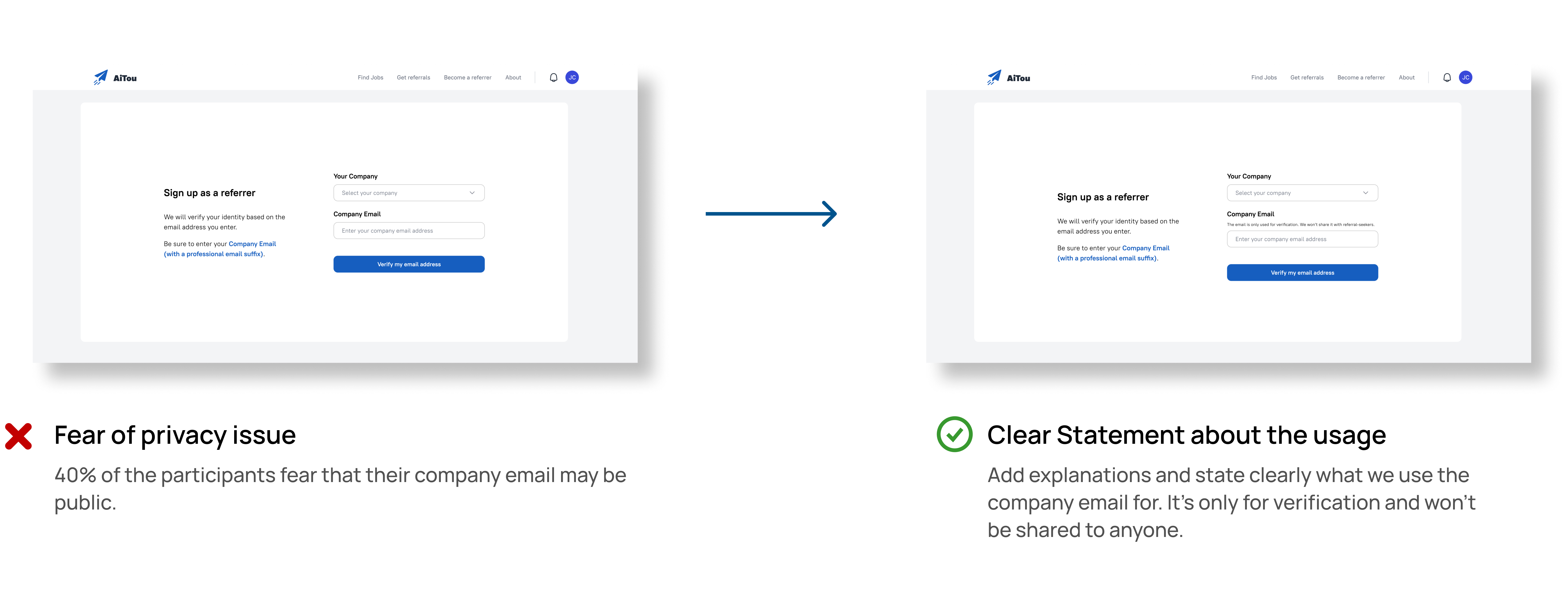
A new system for the rebrand
Alongside the new flows, I built AiTou's first formal design system to support a parallel rebrand - typography, color, components, and motion. The system gave the engineering team a stable foundation to ship the MVP fast and a clear path to extend later.
.png)
Design system - color, type, components
Job referral is deceptively simple - the work is in the seams
Job referral has a clean surface and a messy underside: company referral policies, referrer time scarcity, candidate privacy, request volume management. As the sole designer for 4 months, I had to hold all of it in my head simultaneously, develop the solutions, and sort out priority and feasibility on my own.
The experience also taught me how to deliver clean handoff to developers. My previous experience with HTML, CSS & JavaScript helped me communicate with engineers in their language - and made the trade-off conversations move much faster.
The biggest design lesson: in a two-sided marketplace, protecting one side's experience usually costs the other side something. The job is to find the trades that both sides quietly accept - and design the friction so each side feels respected, not blocked.